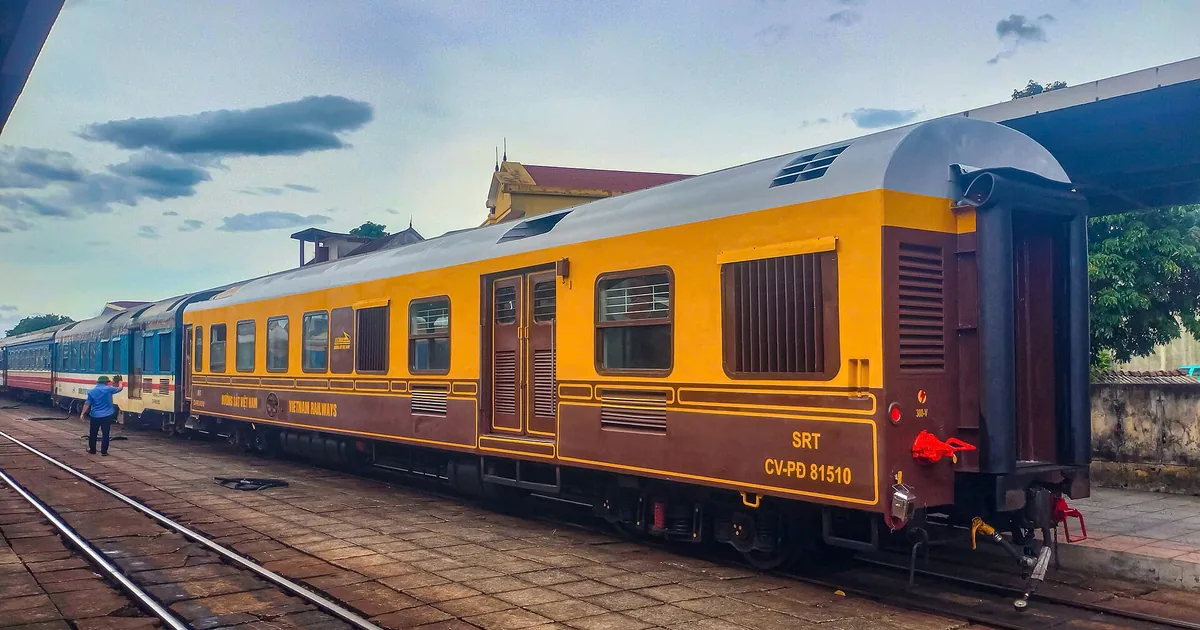
On the morning of 28 August 2026, the heritage tourist train “Phong Nha – Hue Ancient Capital: World Heritage Journey” was officially launched at Dong Hoi station. The route runs roughly 190 km, linking Hue – Dong Ha – My Trach – Dong Hoi – Tho Loc and back, organised by Vietnam Railways together with the People's Committees of Quang Tri province and Hue city.
But the train solves only half the problem. The other half sits in a very practical question: once you step off at the station, where do you go and how? This guide walks through every station on the line, with fares, timetables and realistic ways to build an itinerary.
Fares and promotions: VND 210,000 – 380,000 during launch week
Vietnam Railways opened ticket sales on 17 August 2026, with a set of notable pricing policies:
- Launch week (29 August – 5 September 2026): 50% off all ticket classes. Discounted fares range from VND 210,000 to 380,000 per passenger for the Hue – Tho Loc leg.
- From 6 September to the end of 2026: 15% off the published fare.
- Return tickets: an extra 10% off the return leg.
- Groups, travel companies and policy beneficiaries have their own dedicated rates.
At these prices, the train is the cheapest part of the trip. The real cost sits beyond the station: transfers, entrance tickets, food and accommodation.
HQ1 – HQ2 timetable and why the timing matters
The pair of trains runs daily in both directions:
- HQ2 (outbound): departs Hue station at 07:15, arrives Tho Loc station at 11:55.
- HQ1 (return): departs Tho Loc station at 13:15, arrives Hue station at 17:25.
Each direction takes just over four hours. The timetable does allow a same-day return, but the gap between 11:55 and 13:15 is only about 1 hour 20 minutes — enough for lunch near the station, not enough to enter a cave. That is exactly why the “after the station” part decides the quality of the trip.
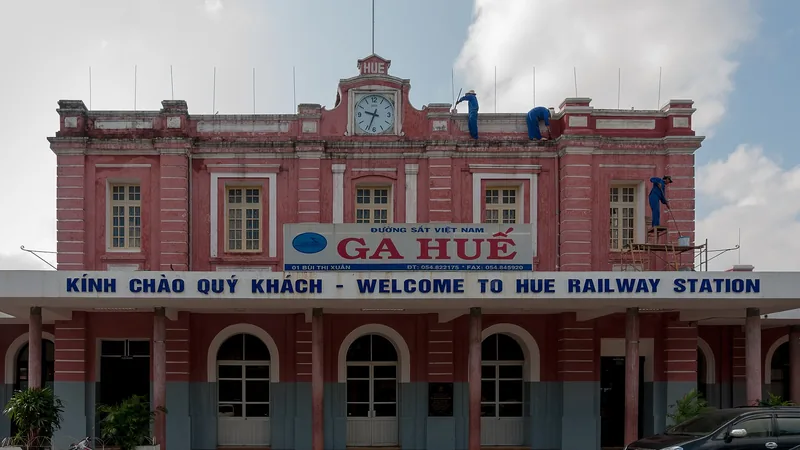
Hue station: departing from the middle of the old capital
Hue station has an advantage very few tourist stations in Vietnam enjoy: it sits right downtown, at the end of Le Loi street, close to the south bank of the Perfume River. A 5–10 minute taxi ride gets you to the Imperial Citadel, the Museum of Royal Antiquities or Thien Mu Pagoda.
Plan to arrive 30 minutes early. With a 07:15 departure, travellers staying in central Hue need to leave their hotel around 06:30 and should pack breakfast to take along — most eateries are not open at that hour.
Dong Ha station: gateway to memory and peace tourism
Dong Ha has the densest cluster of historical sites on the line. Within roughly 15–35 km by road you will find:
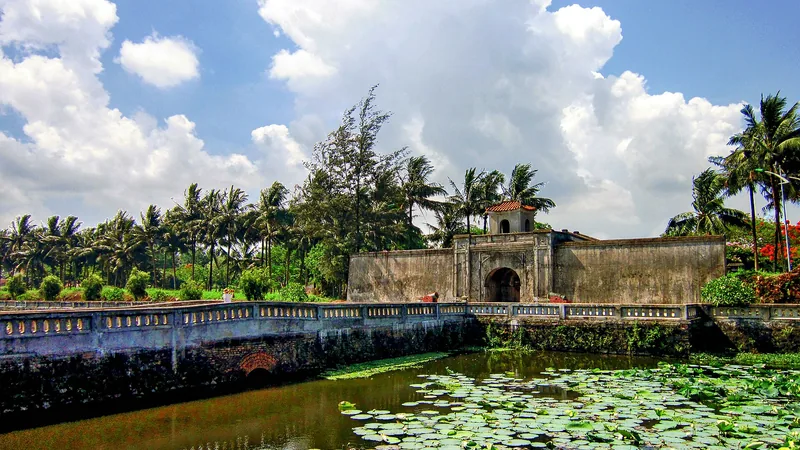
- Quang Tri Ancient Citadel (about 13 km to the south) – the emblematic destination for remembrance travel.
- La Vang Basilica (about 18 km) – the largest Catholic pilgrimage centre in central Vietnam.
- The Hien Luong – Ben Hai riverbank site (about 22 km to the north) – the former provisional military demarcation line.
- Vinh Moc tunnels (about 35 km) and the DMZ area.
This cluster suits a half-day or full-day tour rather than a short station stop. Travellers who want to make the most of Dong Ha should consider getting off here and staying a night, then catching HQ2 out to Phong Nha the next day.
My Trach station: a small stop in a little-known region
My Trach is the least talked-about station on the line, sitting in the Le Thuy area – a wet-rice lowland formerly in Quang Binh province, now part of Quang Tri. It is not a mass-tourism area, but it has exactly what international travellers look for: unvarnished countryside.
Within about 10–25 km lie Hoang Phuc Pagoda, the memorial house of General Vo Nguyen Giap in Loc Thuy, the Bang hot mineral spring and the still-wild Ngu Thuy coastline. Le Thuy is also the cradle of ho khoan Le Thuy folk singing – a national intangible cultural heritage.
This station suits community-based tourism and village cycling more than express sightseeing – a product range that is still thin here.
Dong Hoi station: beach, city and food
Dong Hoi has the best tourism infrastructure on the line after Hue. The station is only about 3 km from the city centre and Nhat Le beach – close enough that transport is barely a concern.
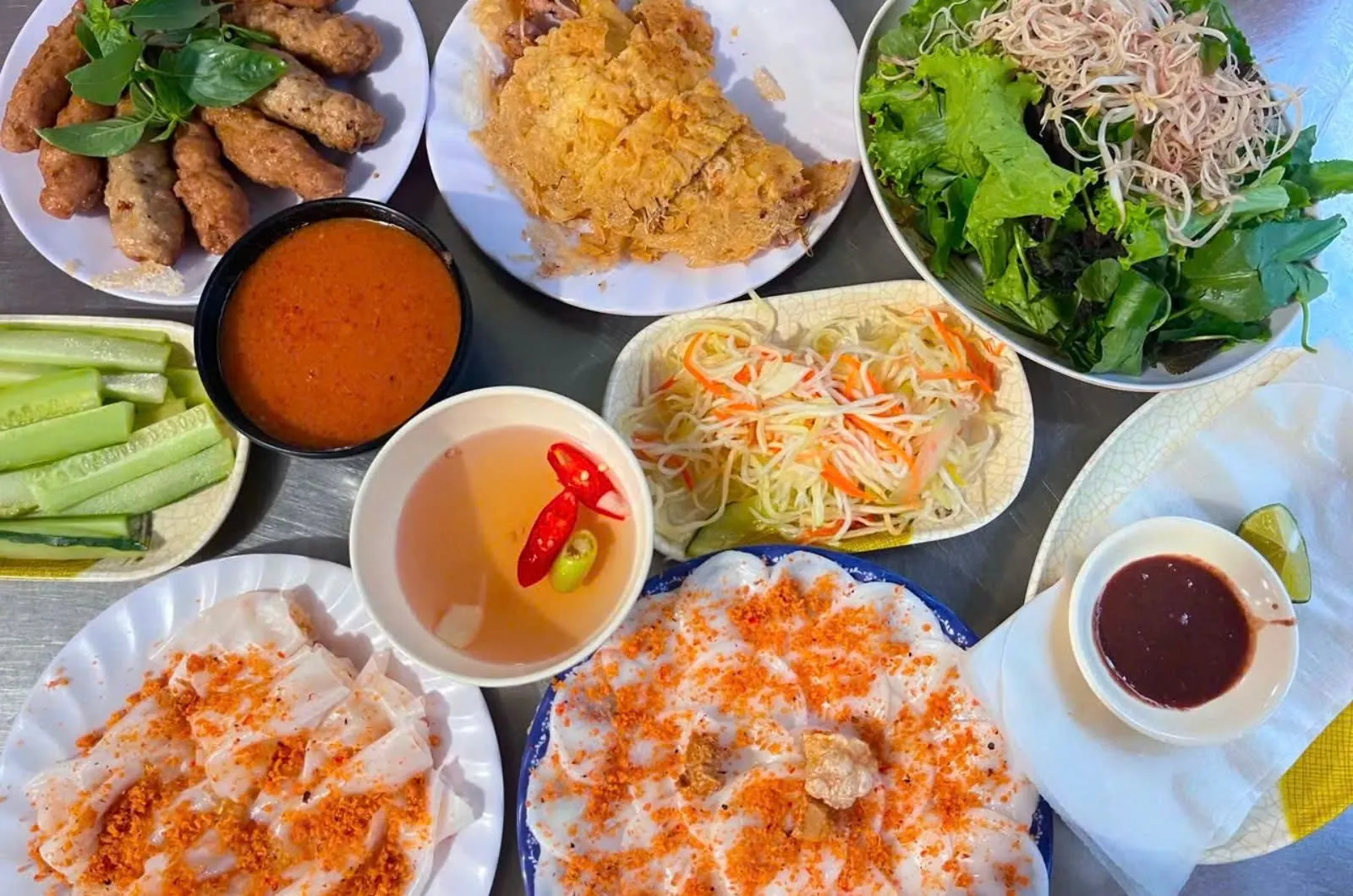
Around the station you will find beachfront hotels, Ho Chi Minh Square, the bell tower of the old Tam Toa church, Dong Hoi market and the Bao Ninh peninsula across the Nhat Le bridge. In the evening, a Dong Hoi night food tour is the most efficient way to try chao canh, banh khoai, banh bot loc and seafood.
For anyone travelling two days or more, Dong Hoi is usually the most sensible overnight base: more accommodation options, softer prices than the Phong Nha area in peak season, plus an airport for the flight home.
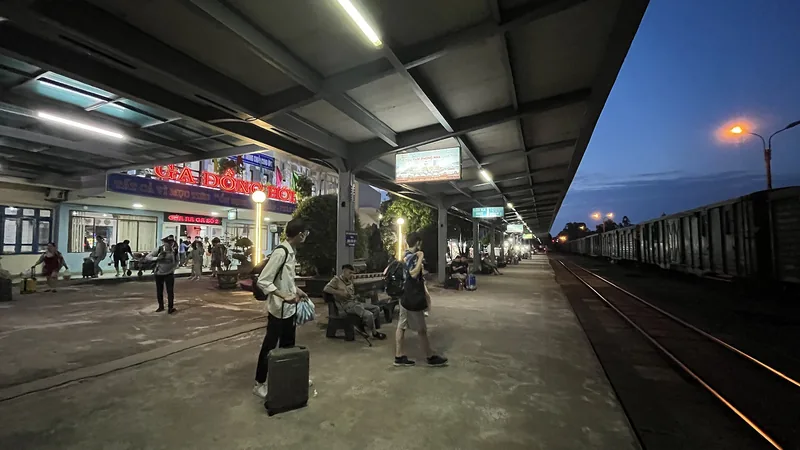
Tho Loc station: the gateway to Phong Nha – Ke Bang
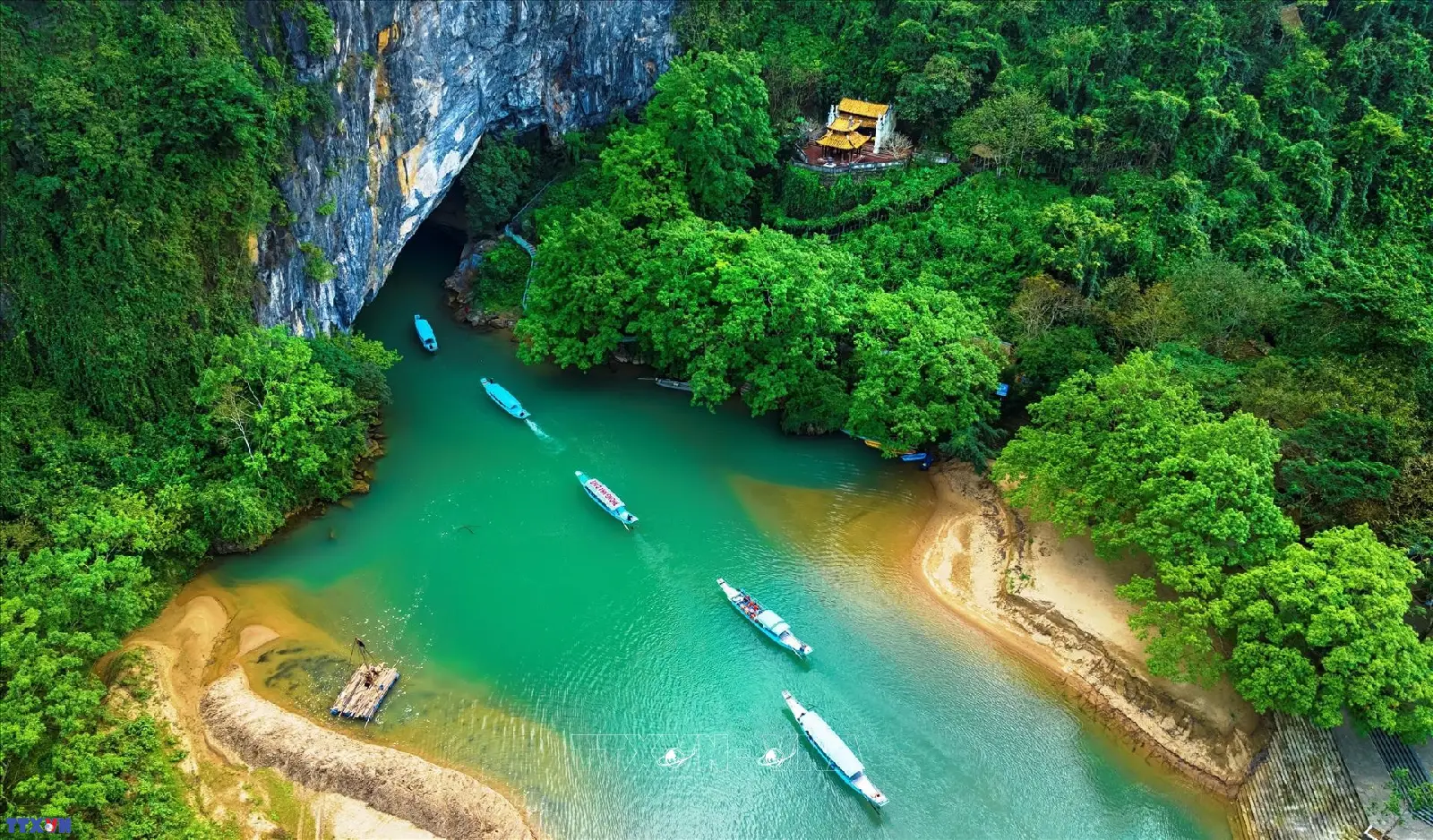
Tho Loc is the final station and the single biggest reason this line exists. It is about 20 km by road to the Phong Nha tourist centre – the stretch you must arrange in advance: the train arrives at 11:55 and more than 300 passengers step off at one small station at the same time.
Suitable products for travellers staying in the Phong Nha area:
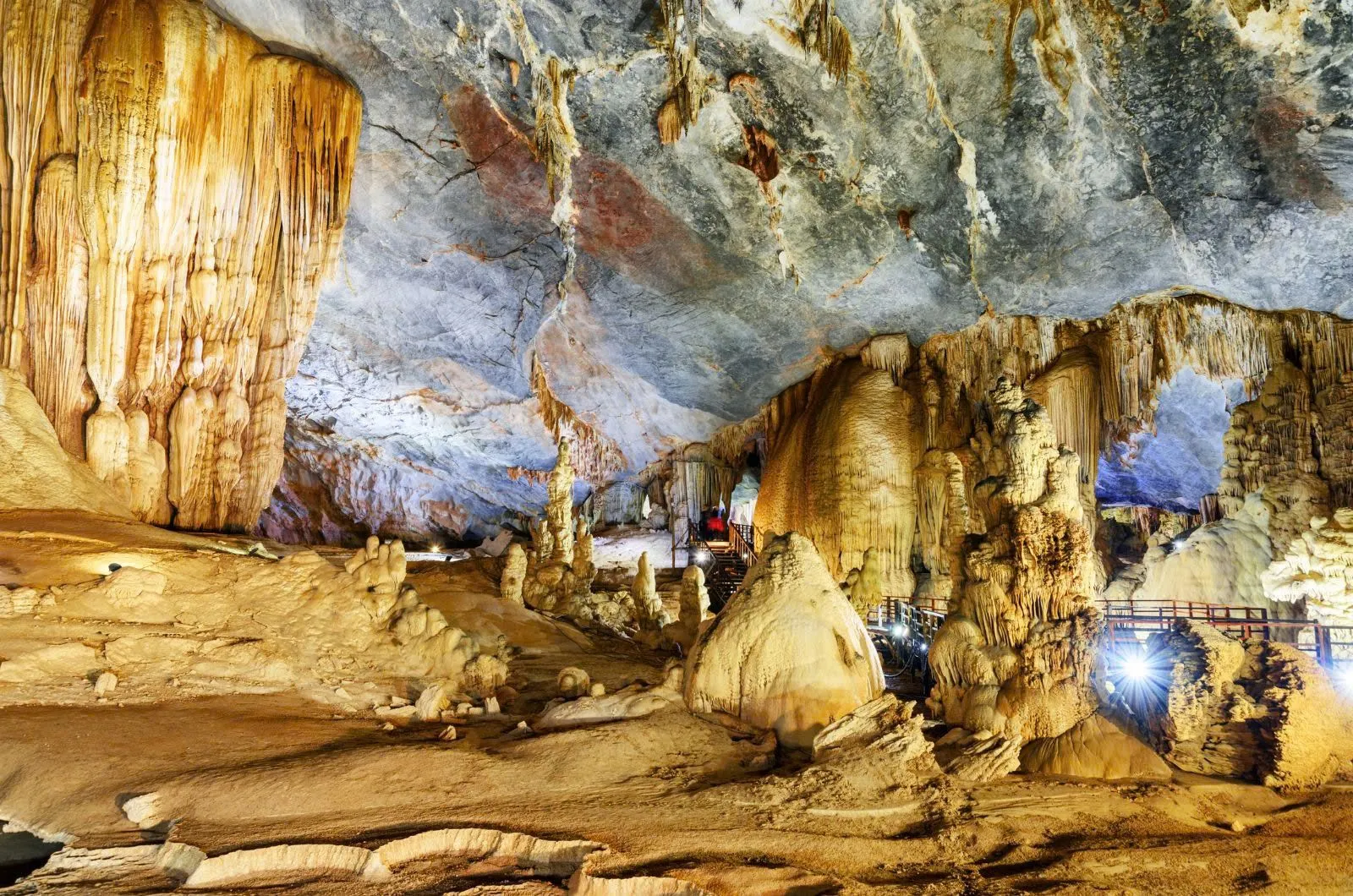
- Phong Nha Cave – Paradise Cave day tour – the classic choice if you only have one full day.
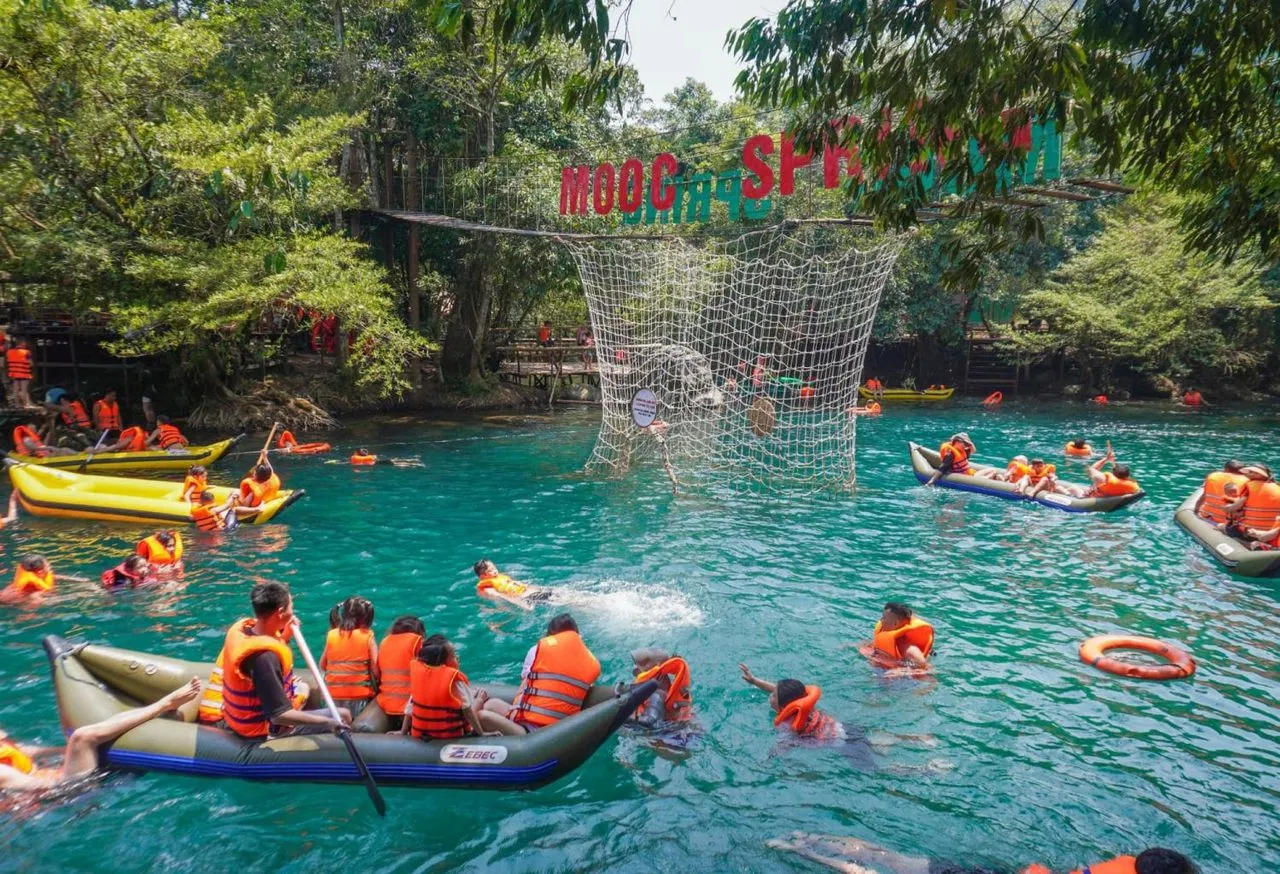
- Phong Nha Cave – Nuoc Mooc Spring – caves plus a swim, ideal in hot weather.
- Cycling – Phong Nha Cave – Chay River & Dark Cave – adds activity and water games.
If you are still torn between the two most famous caves, our article Phong Nha Cave or Paradise Cave compares access, fitness requirements and ticket prices in detail.
“Where do passengers go after they get off?” – the service-chain problem
According to Mr Nguyen Chinh Nam, Deputy General Director of Vietnam National Railway Corporation, what sets a rail tourism journey apart is not the interior fit-out or the on-board services, but the history, culture, landscapes and people of each region the railway passes through. The wider goal is to make the railway a “link” in the tourism ecosystem, where transport and tourism together create extra value for local residents and localities.
From the local government side, Mr Hoang Xuan Tan, Vice Chairman of the Quang Tri Provincial People's Committee, said the train widens the space for cooperation between Quang Tri and Hue, working towards a “World Heritage Journey – Multi-experience Services” product that ties cultural depth to natural wonders and helps reduce the seasonality of tourism.
For the travel companies operating the Hue – Phong Nha corridor, the concern is not that there is one more train, but whether passengers can actually be moved from the station to the attractions: pick-up vehicles, tours that match the train times, places to eat and experiences to choose from. Build that service chain and the station becomes a gateway; without it, it stays a place to board and alight.
Three realistic ways to build the trip
1. Same-day return (not recommended): HQ2 in the morning from Hue, off at Tho Loc at 11:55, lunch near the station, back on HQ1 at 13:15. That is more than eight hours on a train and almost nothing of Phong Nha – it only works if the train itself is your goal.
2. Two days, one night (recommended): Day 1, take HQ2 with a transfer pre-booked at Tho Loc station, visit Phong Nha or Paradise Cave in the afternoon, sleep in Phong Nha or Dong Hoi. Day 2, explore in the morning, then return to Tho Loc for HQ1 at 13:15.
3. Three days, two nights along the heritage axis: Day 1, get off at Dong Ha for the Ancient Citadel – La Vang – Hien Luong cluster and stay in Dong Ha. Day 2, take HQ2 to Tho Loc, visit Phong Nha, sleep in Dong Hoi. Day 3, add another cave or a swim at Nhat Le, then head back on HQ1 – the option that makes use of the most stations.
Four things to check before booking
- Book your station transfer in advance. Tho Loc and My Trach are small stations; when 300-plus passengers arrive at once, on-the-spot vehicles run out and prices are unpredictable.
- Check closing times at the attractions. Many caves stop selling tickets in the early afternoon; looking for a tour after you get off is too late.
- Prefer flexible cancellation on the first departures, while the timetable and station arrangements may still be adjusted.
- Capacity is limited: eight carriages, just over 300 seats, of which only 24 are VIP. Book early for weekends and holidays.
Go365 travels the heritage route with you
Go365 does not sell train tickets, but it covers exactly the part the station does not:
- Tours and experience tickets in Phong Nha and Dong Hoi, timed to fit HQ1/HQ2.
- Transfer services connecting stations and airports with hotels or attractions.
- Travel eSIM for international visitors, so you can check train times and maps the moment you step off.
The train has opened a new line. For those 190 km to pay off, every stop needs to be followed by concrete products that keep travellers longer instead of merely passing through.
Read more: The full picture of the Hue – Phong Nha heritage train: 8 carriages, 360-degree swivel seats · Quang Binh travel guide · What to eat in Dong Hoi.
Fares, timetables and statements from the launch ceremony on 28 August 2026 are compiled from Vietnamese press reports and railway announcements. Road distances are indicative.
Photos in this article (Wikimedia Commons, cropped/resized): heritage train carriage at Dong Hoi station – Nguyenbaotrung725 (CC BY 4.0); Hue railway station – CEphoto, Uwe Aranas (CC BY-SA 3.0); Quang Tri Ancient Citadel – Bùi Thụy Đào Nguyên (CC BY-SA 4.0); Dong Hoi station – Tttrung (CC0).