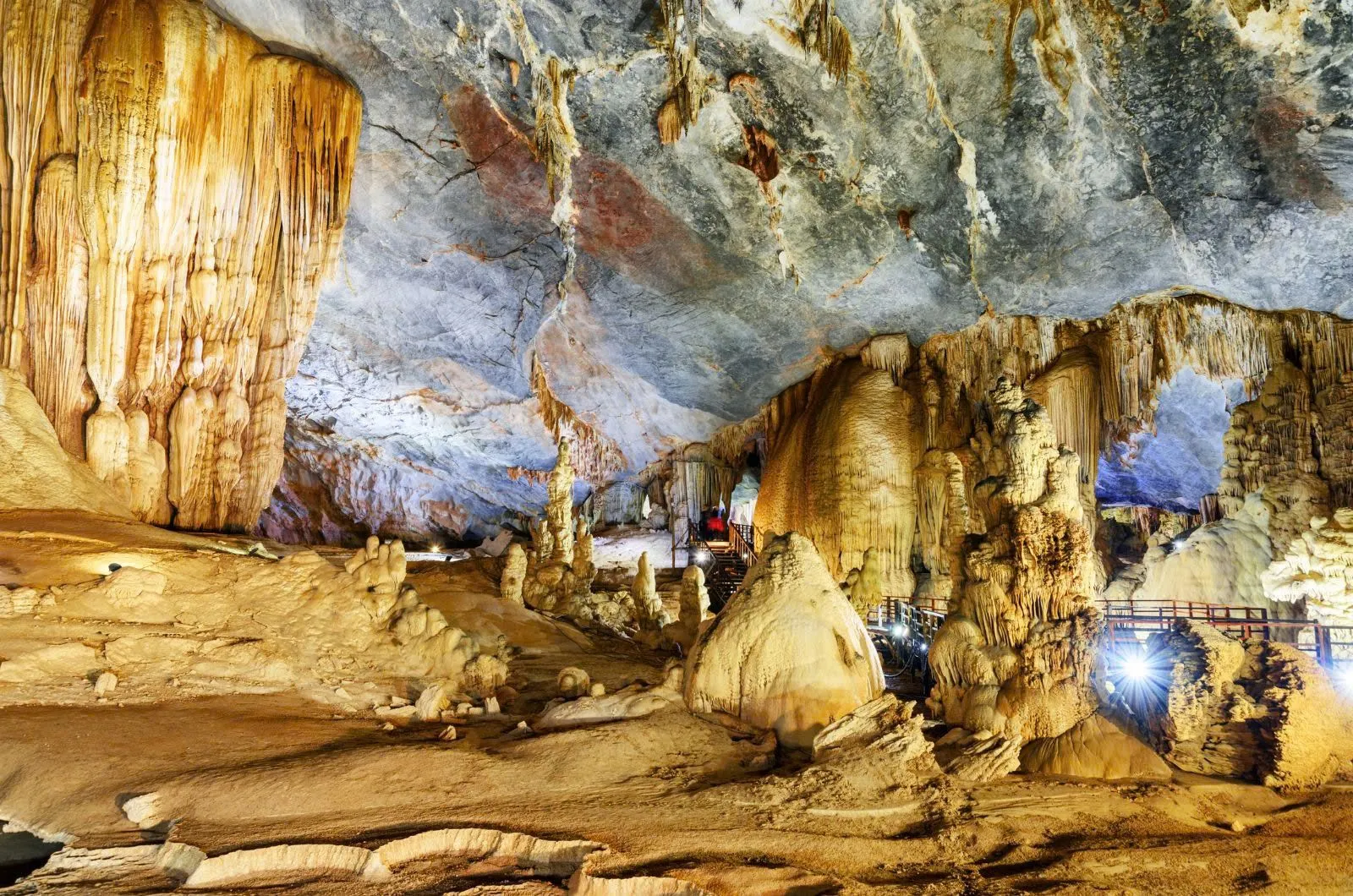
For most travellers, Phong Nha – Ke Bang is a story about caves: Phong Nha, Paradise Cave, Son Doong, Hang En. But right above the ceilings of those caves lies another layer of natural wealth that has until now existed only in scientific reports – the park’s wild bird fauna.
The management board of Phong Nha – Ke Bang National Park (Quang Tri province, formerly part of Quang Binh) has just recorded 17 new bird species, bringing the park’s total to 353. Alongside that, two bird observation points are being built on a trial basis. This is the first time birdwatching has been put on the table as a marketable product in this World Heritage area.
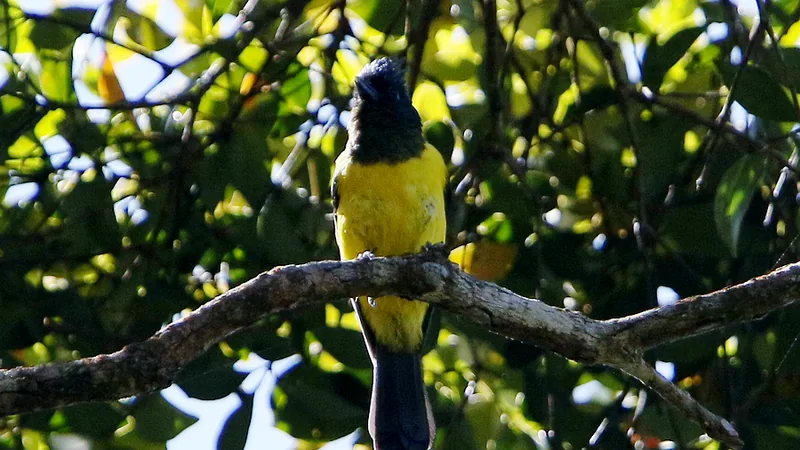
353 bird species, and what the updated figure actually means
The 17 new species were not all found in one place. They are spread across several different habitat types: evergreen forest on limestone karst, forest on earth mountains, rivers, streams and wetlands, and even the transition zone between forest and grassland at the park’s edge.
That detail matters more than the number itself. If birds were concentrated in a single habitat type, visitors could only reach one spot and every season would look the same. When species are spread across multiple habitat layers, operators can design several routes, for different groups of guests, at different times of year.
With 353 species, Phong Nha – Ke Bang ranks among the national parks with the richest bird fauna in Vietnam – and its limestone-karst endemics are the most notable of all.
Two bird observation points now on trial
According to Dinh Huy Tri, Deputy Director of the Phong Nha – Ke Bang National Park management board, these results come from a provincial-level science and technology assignment surveying the park’s wild bird fauna. The research team carried out fieldwork along 13 transects, collecting data on species composition, habitat, distribution and the pressures currently acting on the bird community.
From that data foundation, two bird observation points were set up for testing:
- Inside Phong Nha – Ke Bang National Park – the heritage core zone, where limestone-karst forest is concentrated.
- At the Dong Chau – Khe Nuoc Trong Nature Reserve – intact evergreen forest to the south, little known but extremely rich in biodiversity.
Surveying several visitor groups, the management board found that many travellers are interested in wild birds and want a birdwatching experience, especially of brightly coloured species. The demand and the potential are both real, but this type of tourism has never been developed systematically here, while other national parks around the country have been doing it well for years.
Why “a forest full of birds” is not enough to launch a tour
Tran Xuan Mui, an officer at the park’s Science and International Cooperation Division and a member of the research team, explains: unlike an ordinary sightseeing tour, birdwatching requires the operator to understand each species’ behaviour, habitat and timing. Without that knowledge, guests can walk four hours through the forest and see nothing but leaves.
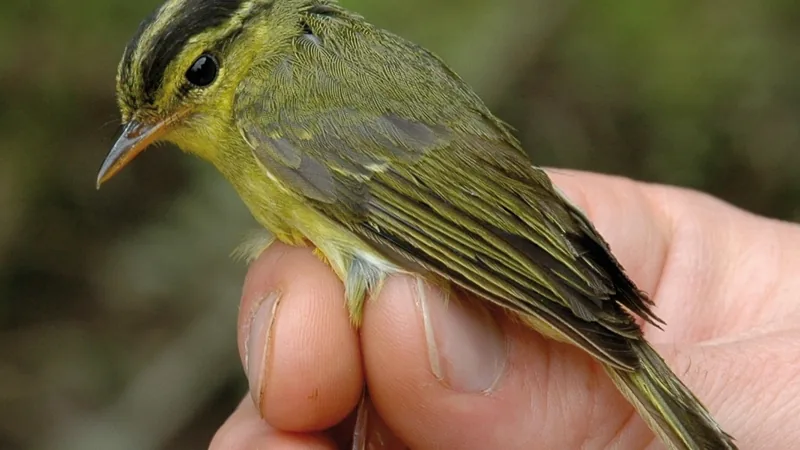
Some endemic or high-conservation-value species such as the limestone leaf warbler and the sooty babbler could well become attractive “target species” for keen birders. But a very specific risk comes with them: “luring” birds – playing recorded calls, using bait or decoy birds – directly disturbs their natural behaviour when done badly.
“The most important thing is to let visitors observe birds in their natural environment while minimising our impact on them. With endemic and rare species we have to be even more careful – we cannot damage a habitat or alter a bird’s behaviour just so a guest can get a look,” Mui says.
What a bird observation point has to have
According to the research team, choosing a location is anything but arbitrary. A viable bird observation point has to satisfy several factors at once:
| Factor | Why it matters |
|---|---|
| Species diversity | Decides whether the trip feels “worth it”; birders measure a day by the number of species recorded |
| Encounter rate | A rare species that appears once a month cannot be built into a tour schedule |
| Habitat characteristics | Canopy layers, forest openness, water sources – these decide whether guests see birds or only hear them |
| Access conditions | The approach road, travel time, safety, and whether older guests can be accommodated |
| Level of human impact | The less disturbed a site, the bolder the birds; send guests to the wrong place and you destroy the site itself |
In other words, creating a bird observation point is not simply a matter of building a hide and walking guests into the forest. The research team built a database and GIS map of bird distribution, using it to identify which areas hold value that must be prioritised for conservation and which are suitable for developing ecotourism.
The principle: conservation first, tourism second
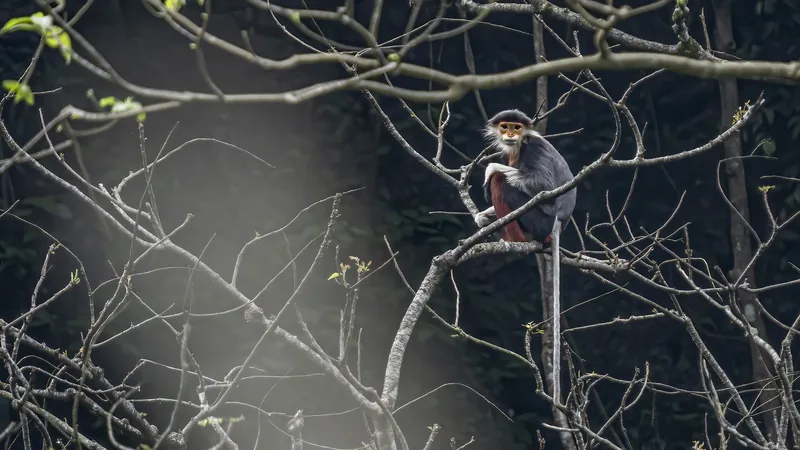
The management board is firm that birdwatching tourism must sit inside a conservation framework: areas of high ecological value are strictly protected, and only suitable areas are chosen for visitor experiences.
This approach means the product arrives more slowly, at a smaller scale and possibly at a higher price than mass-market tours – but for a place whose core value is precisely its intactness, that is a reasonable trade-off.
How birdwatching differs from a cave tour
If you are used to the rhythm of a standard Phong Nha tour, prepare for something completely different:
| Cave tour | Birdwatching tour | |
|---|---|---|
| Departure time | 7–8 a.m. | Before dawn, usually 4.30–5 a.m. |
| Pace | Continuous movement along a route | Very slow, long stops, silence |
| Group size | 20–40 guests | Usually just 4–8 guests |
| Outcome | You will definitely see the cave | Depends on weather and luck |
| Equipment | Torch, non-slip shoes | Binoculars, spotting scope, telephoto camera |
What to prepare if you want to try it
- Binoculars in 8x42 or 10x42 are essential – more important than a camera.
- Neutral-coloured clothing (moss green, brown, grey). Avoid red, orange, white and anything that rustles.
- Trekking shoes with good grip, long socks, and leech repellent in the rainy season.
- Silence your phone, no speakers, and never play bird calls to draw birds in.
- Keep your distance from nests, and go with a local guide – someone who knows which species is where, at what hour, and when to stop.
The best windows are always early morning and late afternoon. The dry season (roughly March to August) is good for forest walking; in the storm season at the end of the year, outdoor activities inside the park are often restricted.
Fitting birdwatching into a Phong Nha itinerary
To be clear: the two observation points are still at the trial stage and are not yet a widely sold product. If you are interested, follow official announcements from the park management board and keep the rest of your itinerary flexible.
In the meantime, the “backbone” of the trip can be booked as usual. Go365 is an online travel platform operating throughout Vietnam, currently selling a range of tours departing in Quang Binh, with prices and conditions shown clearly before you book:
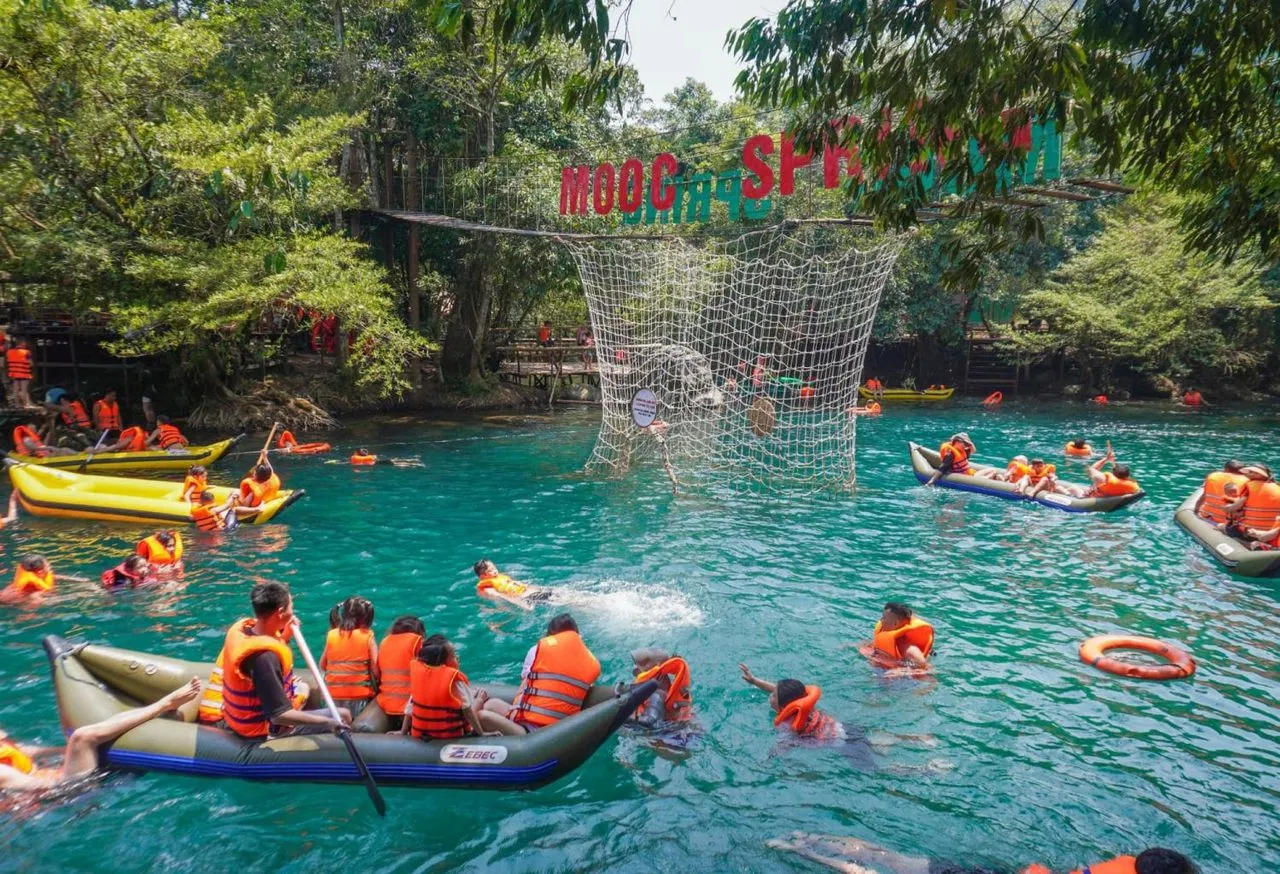
- Phong Nha Cave – Nuoc Mooc Spring day tour – combines caves with river-and-stream habitat, the closest thing to a nature experience.
- Cycling – Phong Nha Cave – Chay River & Dark Cave – a slow ride through the buffer zone, where roadside birds are easy to spot.
- Phong Nha Cave – Paradise Cave day tour – the classic choice for a first visit to the heritage area.
- See all tours and experience tickets, or buy a travel eSIM if you are an international visitor who needs 4G/5G the moment you land.
For itinerary advice based on your number of days and travellers, call our hotline on 0789.9000.77 (or 0789.9000.88 / .99).
The fact that Phong Nha – Ke Bang is starting to treat its bird fauna as a tourism asset shows that the forest’s value does not lie underground alone. And the park’s approach – 13 survey transects, a GIS map, testing before selling – may be the most instructive part of the story.
Source: the provincial-level science and technology assignment surveying wild bird fauna at Phong Nha – Ke Bang National Park, based on statements by park management representatives and the research team in the Vietnamese press, August 2026.
Read more: Quang Binh travel guide 2026, Phong Nha Cave or Paradise Cave and the Hue – Phong Nha tourist train.
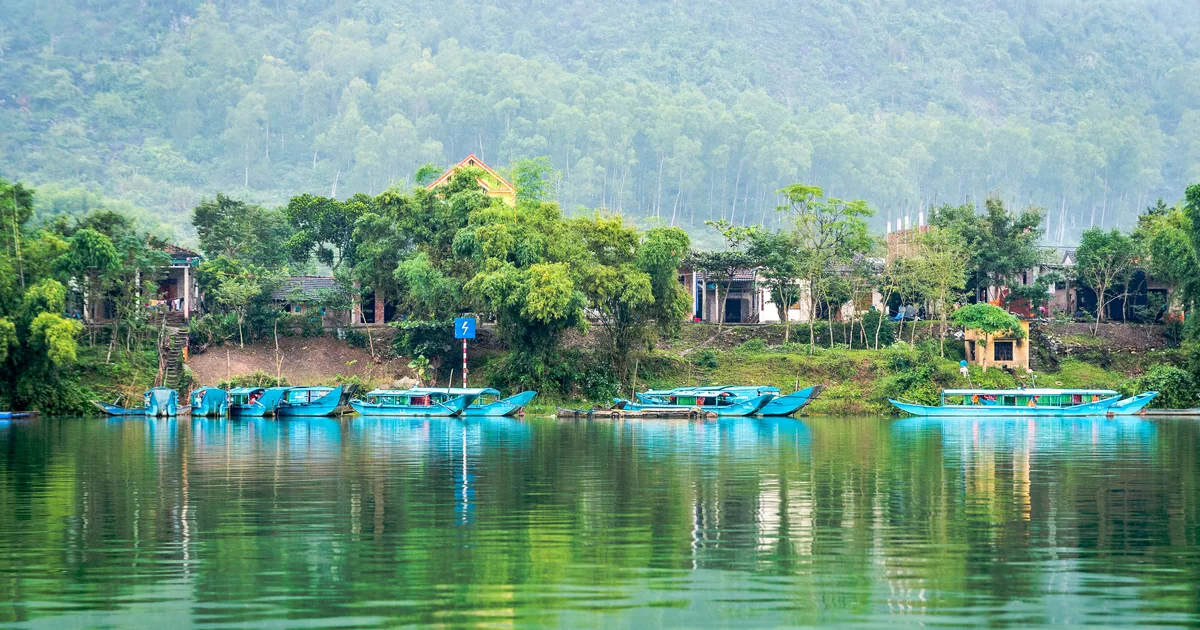
Photos in this article (Wikimedia Commons, cropped and resized): Son River, Phong Nha – Preparetavalise.com (CC BY-SA 4.0); sultan tit – Christoph Moning (CC BY 4.0); limestone leaf warbler – Ulf Johansson / Naturhistoriska riksmuseet (CC BY 3.0); red-shanked douc langur – JHuntphoto (CC BY-SA 4.0).