After more than five months closed for upgrade works, Liên Khương International Airport (DLI) — the air gateway to Đà Lạt and Lâm Đồng province — officially resumed operations at 00:01 on 19 August 2026. On its very first day back, the airport welcomed around 1,000 passengers to Đà Lạt, reopening a highland travel season that the whole tourism trade in central Vietnam had been waiting for since early March.
This article covers everything you need to know: what was actually upgraded, how many flights the airport now handles per day, which domestic and international routes have been restored, and what all of that means for your Đà Lạt travel plans in the last four months of 2026.
Reopening day: first flight landed at 06:45
The first aircraft to touch down on Liên Khương's new runway was VN1380 from Ho Chi Minh City, landing at 06:45 on 19 August 2026. On that opening day the airport was scheduled to handle 28 aircraft movements, bringing roughly 1,000 passengers to Đà Lạt.
A thousand passengers may sound modest against the terminal's design capacity, but this was only day one — airlines are still rebuilding their schedules route by route. According to the plan, Liên Khương will operate 36–40 arriving and departing flights per day in this first phase, equivalent to about 6,800 passengers a day.
For the final four months of 2026, the airport's projected throughput is around 816,000 passengers — a number that tells you just how quickly Đà Lạt is going to fill up again during the year-end peak and the Tết holiday.
Why did Liên Khương close for over five months?
The airport suspended operations on 4 March 2026 to carry out a project to repair and upgrade the runway and taxiway system — the kind of core work you simply cannot do while aircraft are still landing. The investor was the Airports Corporation of Vietnam (ACV), with a total investment of 1,032 billion VND.
It was a costly trade-off: over those five-plus months, an estimated 960,000 passengers were affected. Most of them switched to road travel, or flew into Cam Ranh Airport (Nha Trang) and Tân Sơn Nhất (Ho Chi Minh City) and continued by car up to the highlands. That displaced demand kept the Nha Trang – Đà Lạt and Ho Chi Minh City – Đà Lạt road routes fully booked every weekend through the summer of 2026.
What exactly was upgraded?
The most important part — and the reason a full closure was unavoidable — is in the airfield:
- A new runway 3,250 m long and 45 m wide, with the old asphalt surface replaced by cement concrete. Cement concrete lasts longer and carries heavier loads, which matters a lot in a high-rainfall highland province like Lâm Đồng.
- The E1 and E2 taxiways plus the turning pad were rebuilt; in total about 1.3 km of taxiway was renovated.
- Installation of an Instrument Landing System (ILS) and a new generation of aeronautical ground lighting — genuinely valuable at an airport that regularly sees early-morning fog and low cloud.
The biggest capability change: after the upgrade, Liên Khương can accept Code E aircraft — wide-body types with a wingspan of 52–65 m. Previously the airport mainly handled narrow-bodies such as the A320/A321. Being able to take wide-bodies opens the door to longer international services and to charter flights carrying large groups.
Which routes have been restored?
Domestic routes
From day one of the reopening, Liên Khương restored connections to six domestic points:
- Ho Chi Minh City — the busiest route, with the highest daily frequency
- Hanoi — the key north–south trunk route for travellers from northern Vietnam
- Da Nang
- Vinh
- Hai Phong
- Can Tho
Carriers notified to prepare schedules and aircraft for the reopening include Vietnam Airlines, Vietjet Air, Bamboo Airways, Vietravel Airlines and Pacific Airlines. In this early phase timetables may still shift week to week, so check your flight times close to departure rather than relying on schedules from before March.
International routes
- Đà Lạt – Kuala Lumpur (Malaysia): restored immediately, with four return flights per week.
- Đà Lạt – Singapore: planned at three flights per week from December 2026.
For the travel trade this matters more than the domestic numbers: Southeast Asian travellers can now fly straight into Đà Lạt instead of transiting through Ho Chi Minh City, cutting four to six hours of travel and making short 3-day/2-night packages viable for the Malaysian and Singaporean markets.
What comes next: terminal T2 and the 5-million-passenger target
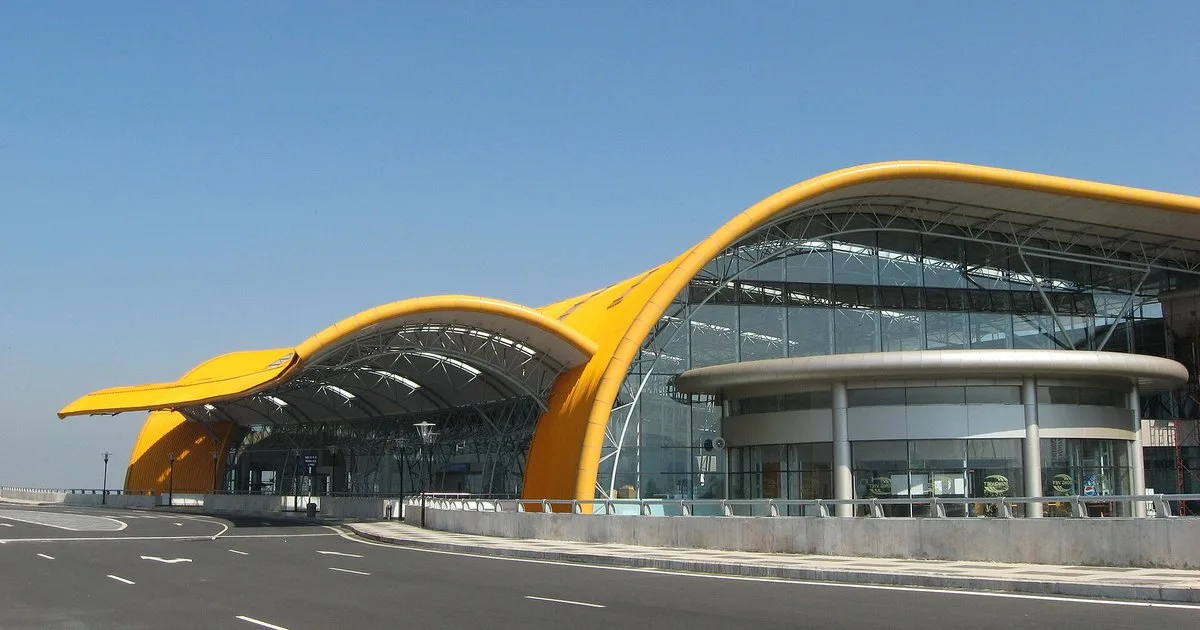
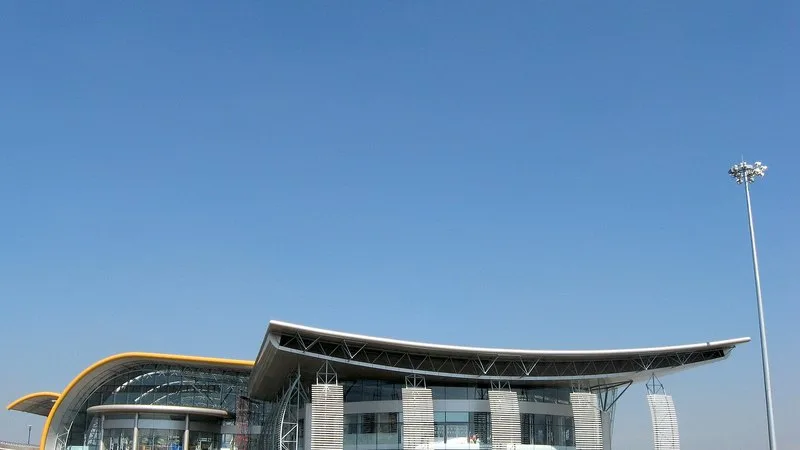
The existing T1 passenger terminal — the building with the distinctive curved roof, often compared to a flower on the plateau — was already close to capacity during past peak seasons. Lâm Đồng province has therefore asked ACV to allocate funding for a new T2 terminal and a new cargo terminal in 2027.
Looking further ahead, the target for 2030 is to bring Liên Khương up to Code 4E international standard, serving 5 million passengers and 20,000 tonnes of cargo per year. In a province whose export strength is agriculture — vegetables, flowers, coffee and tea — the cargo terminal carries economic weight well beyond tourism.
Nguyễn Cao Cường, Chairman of the Board at ACV, described the reopening as "a door opening onto new development" for Đà Lạt and Lâm Đồng.
What does this change for your trip to Đà Lạt?
In practice, for the past five months almost everyone travelling to Đà Lạt had one of three options: fly into Cam Ranh and drive roughly 135 km over the Khánh Lê Pass; fly into Tân Sơn Nhất and take a sleeper bus or limousine coach for about 300 km; or travel by road from Nha Trang, Mũi Né or Ho Chi Minh City. From 19 August 2026 you have the fastest option back: a direct flight into Liên Khương.
A few things worth factoring into your plans:
- Airfares fluctuate sharply in the early phase. With 36–40 flights a day and airlines not yet using every time slot, weekend fares climb faster than weekday ones. If your dates are flexible, flying midweek will save you real money.
- The airport sits about 30–35 km from central Đà Lạt, via the Liên Khương – Prenn expressway and the Prenn Pass, roughly 40–50 minutes by car. This is a leg worth booking in advance, especially for late-evening or early-morning flights.
- Road travel is still very much worth it if your route runs Nha Trang – Đà Lạt or Mũi Né – Đà Lạt, because the drive itself is part of the experience.
A quick note on Đà Lạt itself
Đà Lạt sits at roughly 1,500 m above sea level, which is why it stays cool all year while the coast below bakes. Expect daytime temperatures in the high teens to mid-twenties Celsius and genuinely chilly nights — a drop of more than 10°C compared with Ho Chi Minh City or Nha Trang is normal, so keep a jacket in your cabin bag rather than in checked luggage. The city is compact enough to walk around the Hoà Bình area and Xuân Hương Lake, but the surrounding waterfalls, pine forests, flower farms and cloud-hunting hills are spread out and need a vehicle.
Book Đà Lạt transfers and tours with Go365
Go365 Vietnam is a local tour operator running transfers and tours across Đà Lạt, Nha Trang and Lâm Đồng directly. If you are flying into Liên Khương, you can book in advance:
- Liên Khương Airport – Đà Lạt transfer (meet you in the arrivals hall, drop you at your hotel in the centre) — from 350,000₫ per vehicle
- Đà Lạt – Liên Khương Airport transfer for the return leg
- Đà Lạt city tour (1 day) or the 2-day/1-night Đà Lạt tour if you would rather have the itinerary and a guide arranged for you
- Đà Lạt cloud-hunting tour — the single most rewarding activity in the year-end season
If you are combining Nha Trang with Đà Lạt, see our guides on the best season to visit Đà Lạt and pickup and drop-off points in Đà Lạt. While you are there, don't miss Bảo Đại Palace I, which has just reopened.
For help matching transfer times to your flight or building an itinerary, call the Go365 hotline +84 789 900 077 (or +84 789 900 088 / .99).
Sources: Civil Aviation Authority of Vietnam, Airports Corporation of Vietnam (ACV), Tuổi Trẻ and the Vietnam Government Portal, June–August 2026. Photos: Wikimedia Commons, public domain.