Updated: 09/2026 — ticket and tour prices are taken from Go365's live booking system.
In early September 2026 a Vietnamese name appeared once more on a National Geographic Traveller list: Topas Ecolodge in Sa Pa was included in the Mountains and Lakes Collection — for the second time, and again as the only property in Vietnam to make the cut. The interesting part is not the badge. It is the fact that the place the world singled out sits on a bare hilltop a 45-minute drive from Sa Pa town, and that it grew out of a partnership with a local Vietnamese family. This article tells that story, then turns it into practical advice for your own Sa Pa trip in 2026: when to go, where to sleep, what the Fansipan cable car actually costs, and which region to pair Sa Pa with once you have flown all the way north.
What exactly did National Geographic award?
The Mountains and Lakes Collection is not a scored ranking. It is an editor-curated selection of mountain and lakeside stays whose landscape, architecture and way of operating are judged worth the journey. Topas Ecolodge has now been chosen twice, and on both occasions it was the only Vietnamese entry.
The lodge is no stranger to international lists. According to figures reported in the Vietnamese press, in 2025 it scored 98.41 out of 100 in a Condé Nast Traveler survey, placing third among Asia's leading resorts; in 2026 it also entered Travel + Leisure's Top 10 Best Upcountry Hotels in Vietnam. It is likewise the home base of the Vietnam Mountain Marathon — a detail that tells you plenty about the terrain around it.
What matters for travellers in Vietnam is which quality was rewarded: not star count or luxury, but setting — 360-degree mountain views, valleys of terraced rice fields, and a way of building that leaves the view intact.
From a Vietnamese family in Sa Pa to 50 bungalows on two hilltops
It began in 1993, when the Danish tour operator Topas Travel teamed up with a Vietnamese family in Sa Pa to run village treks. Almost a decade later, in 2002, the family's son — Lê Thiện — found the hill that would become the lodge: an open shoulder of land looking straight down a valley, inside the buffer zone of Hoàng Liên National Park.
The lodge opened in 2005 with no grid electricity and no Wi-Fi. The terrain forced that choice, but it quietly became the identity of the place: guests come to look at mountains, not at screens. Today there are around 50 bungalows and villas spread over two hilltops, built from granite quarried on site, with a layout that blends the northern Vietnamese stilt house with Scandinavian lines. Every unit has its own terrace over the valley.
Operations follow the same logic: two saltwater infinity pools heated by eco-friendly systems, a constructed wetland that filters wastewater, a commitment to cutting single-use plastic, and staff hired mostly from the surrounding villages. The spa works with local ingredients, including the Red Dao herbal bath — a remedy you once had to walk into a village to try.
In short, it is a "build little, keep much" model. In a destination that is being concreted over as fast as Sa Pa, that is precisely why one hilltop caught National Geographic's eye.
Why is Sa Pa called "a miniature Switzerland"?
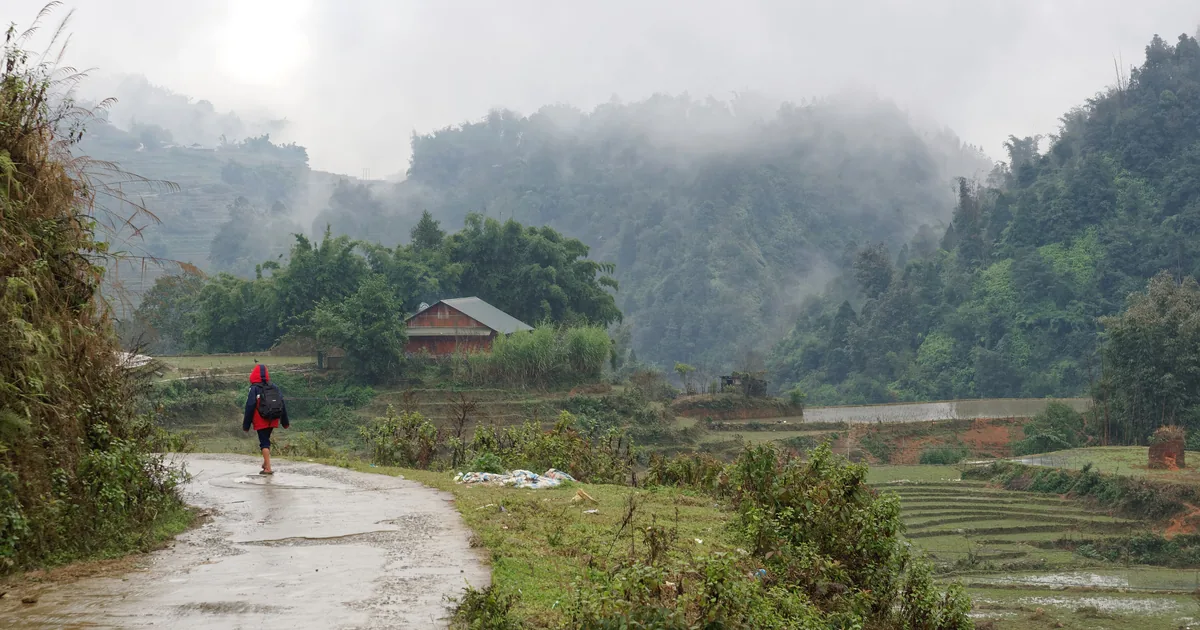
The comparison has nothing to do with snow. It comes from the shape of the landscape: deep valleys, steep slopes with villages clinging to them, winding mountain roads, and cloud drifting at eye level in the morning. The heart of that feeling is the Mường Hoa valley with the hamlets of Lao Chải, Tả Van and Bản Hồ, where rice terraces stack from the valley floor almost to the ridgeline.
The real difference from Switzerland is the rhythm of life. Here the terraces are still farmed, the market days are still working markets, and the farming calendar decides what you will see. Which leads straight to the most important planning question — which month.
When is the best time to visit Sa Pa?
| Period | Main scenery | Notes |
|---|---|---|
| March – May | Rhododendron in bloom on Hoàng Liên, clear skies | The prettiest low season of the year |
| Mid-May – June | Water-pouring season; terraces turn into mirrors | Afternoon showers, slippery trails |
| July – August | Deep green terraces, cool air | Peak rainfall, watch for landslides |
| Late August – October | Golden ripe rice — the best window of the year | Busy; book rooms and trains 3–4 weeks ahead |
| November – February | Cloud hunting, frost, occasional ice on the summit | 5–10°C, bring a proper winter jacket |
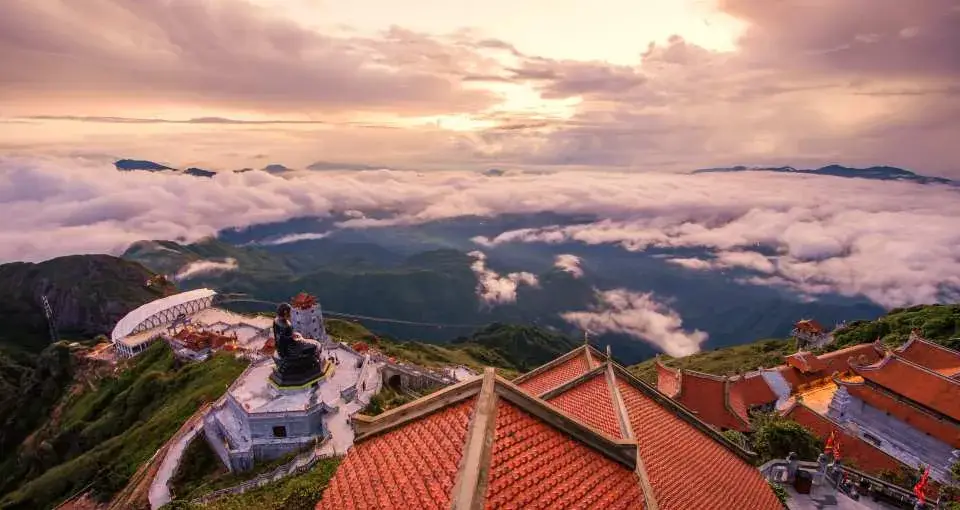
If you only get one shot, choose late September to mid-October: ripe rice fills the Mường Hoa valley, the air is dry, and the Fansipan cable car is rarely swallowed by cloud.
A suggested 3-day, 2-night Sa Pa itinerary
| Day | Morning | Afternoon – evening |
|---|---|---|
| Day 1 | Hà Nội to Sa Pa (limousine van, 5–5.5 hours, or the night train to Lào Cai plus 38 km) | Check in, walk up Hàm Rồng for sunset, dinner at the grill stalls near the stone church |
| Day 2 | Fansipan cable car to the 3,147 m summit — take the earliest departure to beat the cloud | Easy afternoon trek in Mường Hoa: Lao Chải to Tả Van, homestay or back to town |
| Day 3 | Cát Cát village or the weekly market if the day falls right; brocade shopping | Return to Lào Cai / Hà Nội |
If you follow the Topas model — sleeping out in the valley rather than in town — swap days 2 and 3 and give the lodge a full day instead of driving in circles. Sa Pa town is crowded now and full of building sites; the real value of the trip sits in the valleys outside it.
Real costs and ticket prices
Sun World Fansipan Legend is the biggest line in a sightseeing budget. Current prices on Go365 (see every Fansipan ticket type):
| Ticket | Adult (from 1m40) | Child 1m – 1m39 |
|---|---|---|
| Cable car, return | 850,000₫ | 550,000₫ |
| Cable car + Mường Hoa mountain train | 1,018,500₫ | 727,500₫ |
| Full combo: cable car + Mường Hoa train + summit funicular return | 1,370,000₫ | 1,070,000₫ |
| Summit funicular, one way up | 170,000₫ | — |
| Lunch buffet, Vân Sam restaurant | 330,000₫ | 250,000₫ |
Money-saving note: if you can handle the 600 steps from the cable car station to the peak, skip the summit funicular and save 320,000₫ per person. Travelling with grandparents or small children, buy the full combo instead — buying piecemeal on a busy day means queueing twice.
Beyond tickets, budget roughly per person for three days and two nights: 700,000–1,000,000₫ for the return limousine from Hà Nội, 500,000–1,200,000₫ a night for a hotel in town (valley eco-lodges start around 2,500,000₫ a night), and 400,000–700,000₫ a day for food. That lands near 4–6 million ₫ staying in town, and roughly double if you go the retreat route.
What to pair with Sa Pa on a northern trip
Sa Pa pairs best with Hà Giang: the same season, the same arc of the far north, and two completely different landscapes — soft terraces against a vertical limestone plateau. Go365 runs Hà Giang departures from Hà Nội, adult prices from:
- Hà Giang 3 days 2 nights — Hà Nội to the Đồng Văn karst plateau: from 2,775,000₫
- Đồng Văn karst plateau, 4 days 3 nights by car: from 3,525,000₫
- Hà Giang 4 days 3 nights by motorbike: from 4,462,500₫
- Hà Giang 5 days 4 nights by motorbike: from 5,212,500₫
A sensible 7–8 day plan: Hà Nội → Hà Giang (3–4 days) → Lào Cai → Sa Pa (2–3 days) → Hà Nội. The reverse works too, but keeping Sa Pa last leaves you a softer landing before the flight home.
How Go365 helps with your Sa Pa trip
Go365 does not sell rooms at Topas Ecolodge — we would rather say so plainly. What we do well is the rest of the trip: Fansipan cable car tickets and combos issued as QR codes you scan straight at the gate, regular Hà Giang departures, and tailor-made itineraries for families, corporate groups and international guests — including booking a valley lodge for you if the Topas kind of stay is what you are after.
For quick advice, call our hotline on +84 789 9000 77. The operations desk answers outside office hours, and every quote arrives with its cancellation terms spelled out before you pay.
Cover photo: road and rice terraces in Sa Pa — Jakubhal / Wikimedia Commons, CC BY 4.0.