If you only leave central Buon Ma Thuot once, make it for the waterfall cluster on the Sêrêpôk River. About 25 km south of the city, Dray Nur, Dray Sáp and Gia Long sit close enough to see in a single day, yet each has a completely different character.
This is also one of the rare places in Vietnam where a river runs the "wrong" way: the Sêrêpôk does not flow to the East Sea but westward into Cambodia, joining the Mekong. This guide covers everything you need: how to get there, ticket prices, the best season, what to do at each fall, photography tips, and safety points not every guide mentions up front.
The legend: the wife fall, the husband fall and a river of two waters
Before it became the Sêrêpôk, this river was two: Krông Ana (the female river) and Krông Nô (the male river). They meet and flow west together. The Ê Đê tell of a young couple from two villages forbidden to marry; they threw themselves into the water, and a storm split the banks into two rivers.
Since then Dray Nur has been the wife fall — in Ê Đê, "dray" means waterfall and "nur" a soft, gentle flow — while Dray Sáp is the husband fall, meaning "smoke waterfall", because in high water the spray hangs over the river like smoke. Hearing the legend before you stand beneath the falls changes how the roar sounds.
Dray Nur: the widest fall, with a cave behind the water
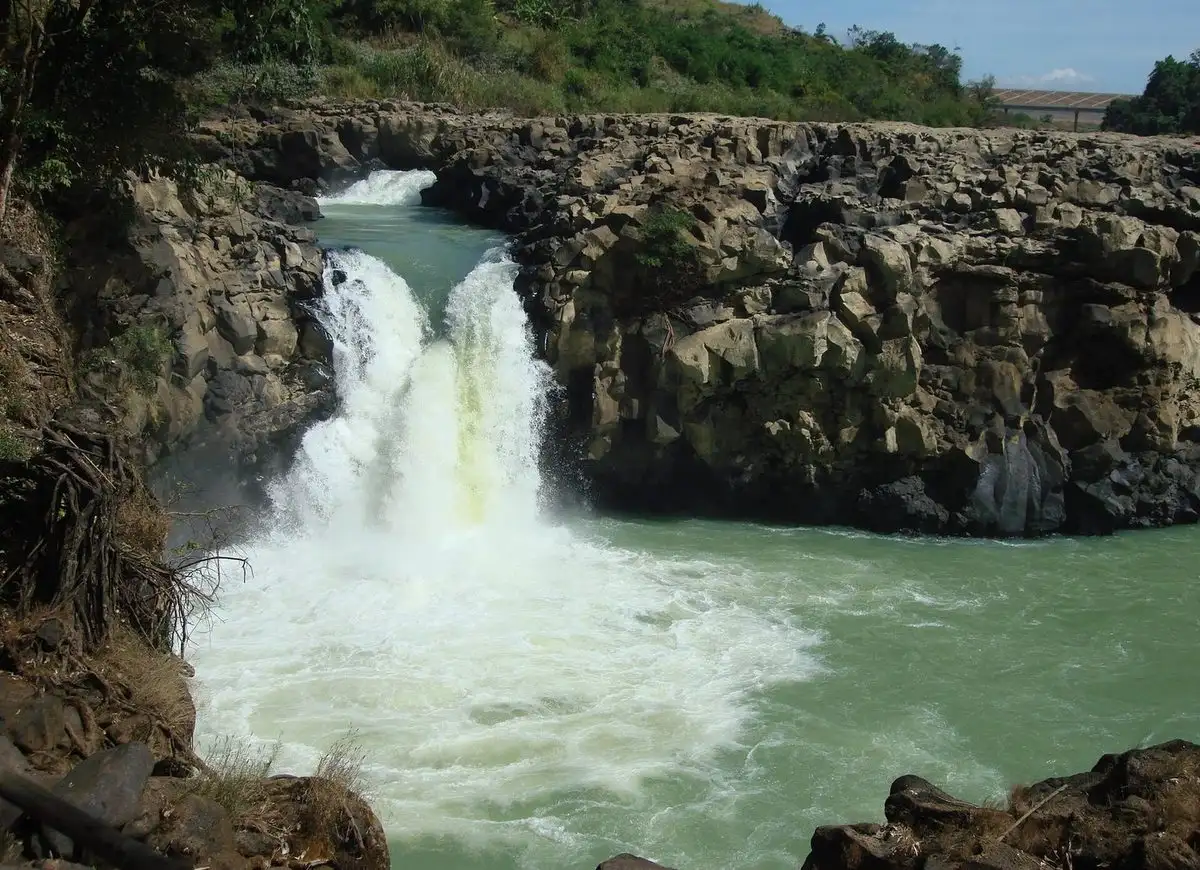
Dray Nur lies on the Đắk Lắk bank, in Krông Ana district, about 25 km from central Buon Ma Thuot. It is roughly 30 m high and spreads up to 150 m — and the width is what makes it startling: you are not looking at a column of water but at an entire wall of it.
Its signature feature is the cave behind the curtain of water. In the dry season, when flow drops, you can follow the rock face into the gap between cliff and falls and watch daylight come through the water from the inside. Never attempt this in the wet season — the flow is powerful, the rock is slick and the water level rises fast.
The site has a suspension bridge, a trail down to the base and a few shelters. Allow 1.5 to 2 hours for Dray Nur alone if you want to reach the base and climb back without rushing.
Dray Sáp Thượng: the smoke waterfall on the far bank
Dray Sáp sits on the opposite bank, now part of Lâm Đồng province after Đắk Nông was merged into it on 1 July 2025. The two falls are only a few hundred metres apart as the crow flies, but because they face each other across the river you must drive around — about 20–25 minutes from one gate to the other.
Dray Sáp is beautiful in a different way: a powerful flow, layered basalt shelves and the thick veil of spray that gave it its name. Wooden walkways and riverside paths make it slightly easier going than Dray Nur. If you can only see one fall and you want misty photographs, choose Dray Sáp in September.
Gia Long: the quietest of the three
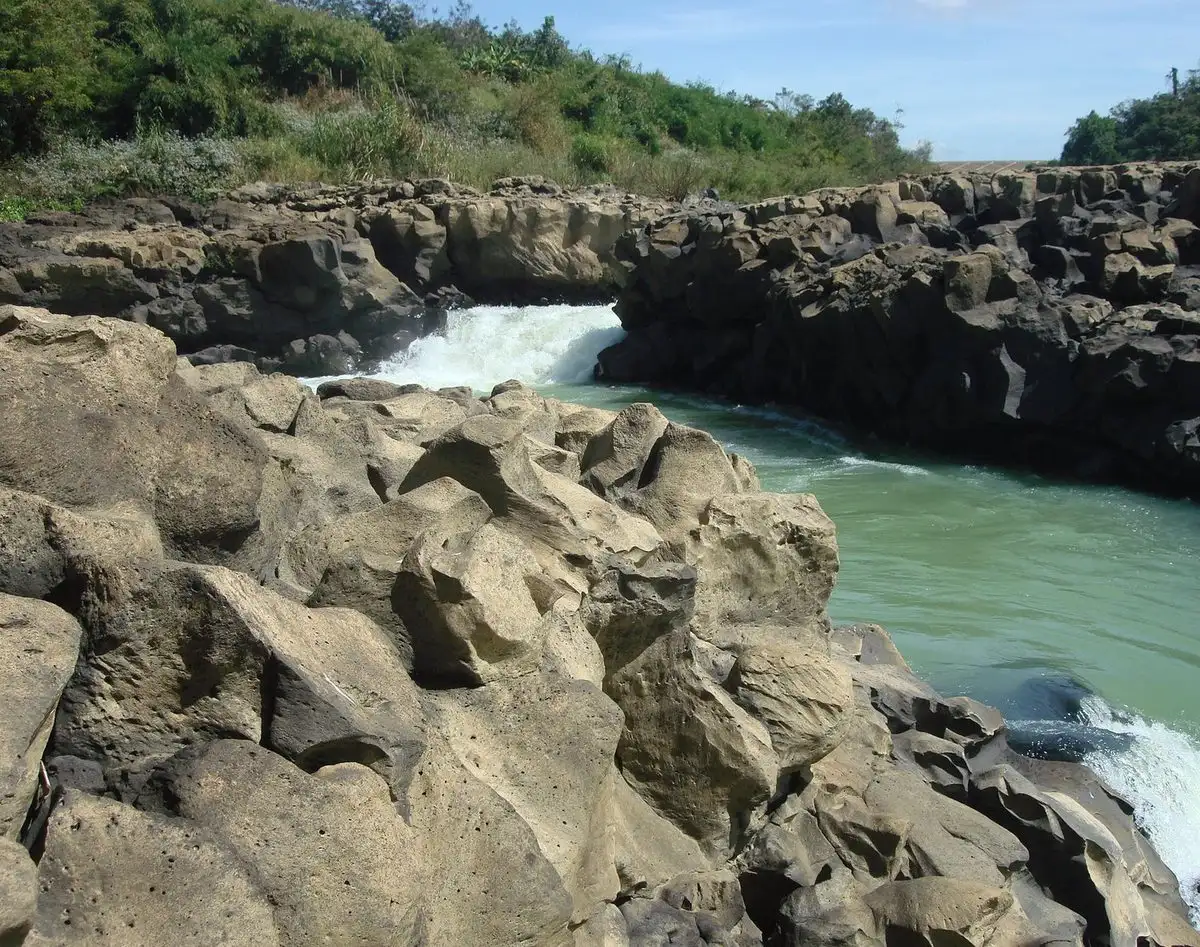
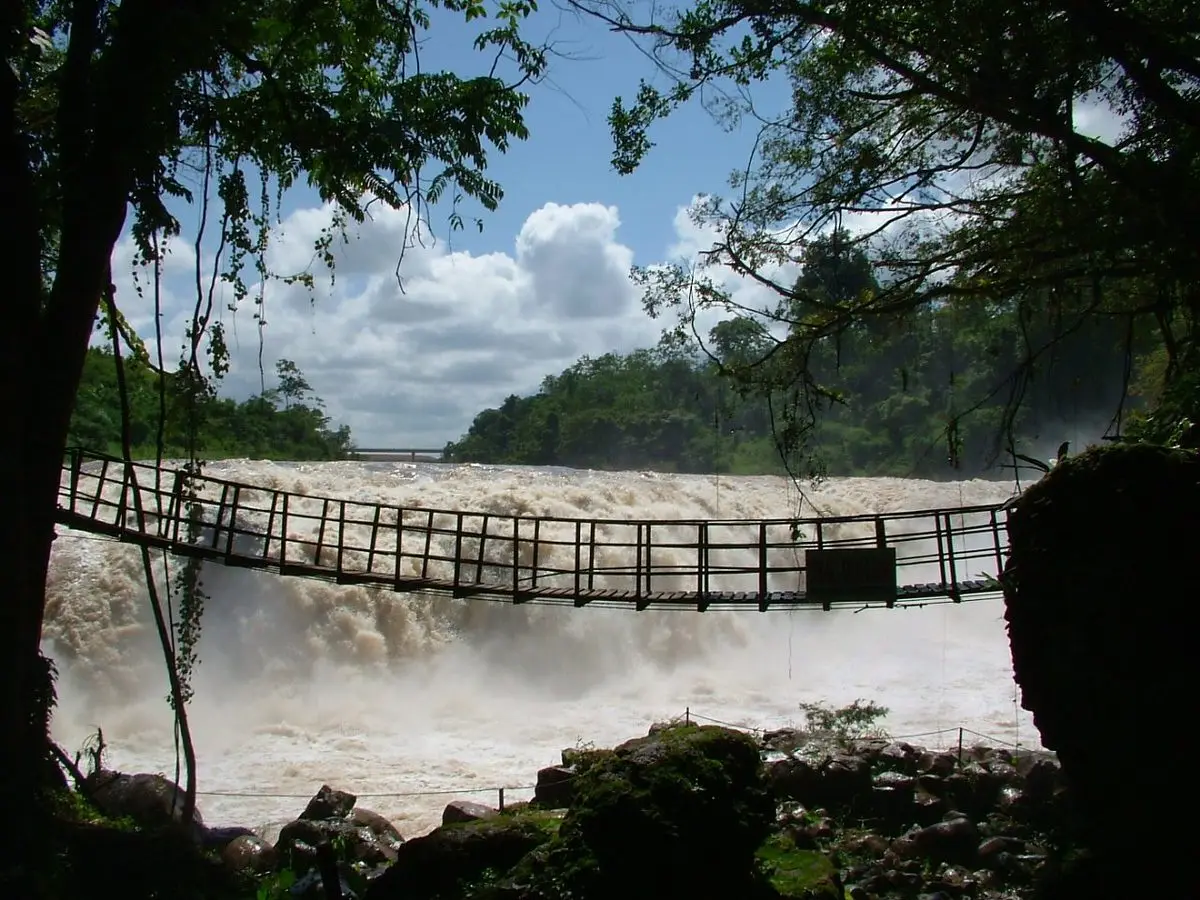
Gia Long lies further upstream, not far from Dray Sáp, and sees the fewest visitors of the trio. Its name recalls the road opened for Emperor Bảo Đại's hunting trips in the area. The highlight is a natural bathing pool of clear water set among basalt boulders, plus an old suspension bridge across the current.
Because so few people come, Gia Long feels the wildest. In exchange, facilities are minimal and parts of the trail are steep and slippery after rain. Travelling with elders or small children, consider staying on the upper viewing area.
The three falls compared
| Criterion | Dray Nur | Dray Sáp | Gia Long |
|---|---|---|---|
| From Buon Ma Thuot | ~25 km | ~30 km | ~35 km |
| Strength | Widest, cave behind the falls | Dense spray, layered rock | Wild, natural pool |
| Ease of access | Moderate | Easiest | Hardest |
| Time to allow | 1.5 – 2 hours | 1 – 1.5 hours | 1 hour |
| Best for | Everyone | Families, older travellers | Walkers, photographers |
Getting there, tickets and opening hours
From central Buon Ma Thuot, take QL14 south for about 12 km, then turn onto the provincial road towards Dray Sáp commune. The whole route is paved and fine for motorbikes and cars alike. Travel time is 40–50 minutes.
- Motorbike: the most flexible option, around 120,000 – 180,000₫/day in the city. Fill the tank before leaving town — petrol stations thin out along the way.
- Private car or taxi: worth it for groups of four or more, and it shields you from sun and sudden rain.
- Join a day tour: easiest, since you do not have to work out the detour between the two river banks, and a guide will know the legends and the good photo spots.
Entrance tickets are typically around 30,000 – 60,000₫ per person, less for children, with a small parking fee at some sites. Opening hours are usually 07:00 to 17:30. Prices and hours can shift with the season, so it is worth checking before you set out.
When are the falls at their best?
| Season | State of the falls | Verdict |
|---|---|---|
| August – October | Highest water, heavy spray, thunderous noise | Best for photography and sheer power |
| November – January | Moderate flow, clear skies, little mud | The best all-round balance, good for families |
| February – March | Water receding; the cave behind Dray Nur becomes accessible | Good for cave explorers |
| April – June | Lowest water, much exposed rock | Less dramatic photos, but easy walking |
Photography tips
- Golden hour for water rainbows: roughly 09:00 – 11:00, when low sun cuts through the spray at Dray Nur and a small rainbow appears right in front of the lens.
- Bring a lens cloth: spray settles fast, especially in the wet season. One microfibre cloth can save the whole shoot.
- Long exposures need a small tripod; the rocks are wet and slippery, so never place gear at the water's edge.
- Drones: many sites require permission before flying — ask at the ticket booth rather than being stopped mid-flight.
- Clothing: light or warm colours stand out beautifully against black basalt and white water.
Safety before you head down to the base
- Do not swim directly beneath a waterfall. The undertow is far stronger than it looks, even for strong swimmers.
- Water can rise quickly when it rains upstream, even while the sun shines where you stand. If the sound changes or the water turns muddy, leave the streambed immediately.
- Wear shoes with grip. Moss-covered basalt is slicker than it appears; flip-flops are the most common cause of twisted ankles here.
- Do not climb onto boulders for photos — they are wet and there is rarely a second handhold.
- Carry water and insect repellent; the riverside forest gets mosquito-heavy in late afternoon.
- Start back before 15:30 so you still have light for the climb; the trails darken quickly once the sun drops behind the ridge.
Eating near the falls
Restaurants around the sites serve grilled chicken, cơm lam (bamboo rice) and Sêrêpôk river catfish grilled with chilli salt, along with sour soup. The river catfish is the dish most worth trying, since this is the river it comes from. If you are in a group, order before you head down so the food is ready when you climb back up — otherwise expect a 30–40 minute wait.
For the wider food scene, see what to eat in Buon Ma Thuot.
Fitting the falls into your itinerary
The cluster fills one full day and combines well with the rest of Đắk Lắk:
- The day before: a Buon Ma Thuot city tour — Đắk Lắk Museum, Khải Đoan Pagoda, Trung Nguyên Coffee Village.
- The day after: Lắk Lake and Buôn Jun village, about 60 km from the falls.
- With extra time: Buôn Đôn and Yok Đôn, to walk with the elephants in the dry forest.
The full three-day framework is in our Buon Ma Thuot travel guide.
Book the waterfall tour with Go365
Go365 Vietnam runs its own day tours from Buon Ma Thuot to the waterfall cluster, with hotel pick-up and local guides:
- Buon Ma Thuot – Dray Sáp Waterfall – Đắk Lắk tour — the full Sêrêpôk cluster
- Dray Nur Waterfall – Đắk Lắk city tour, 1 day — falls plus city highlights
- Buon Ma Thuot – Lắk Lake – fruit orchard tour — ideal for the following day
For departure times or an itinerary matched to your flights, call the Go365 hotline +84 789 900 077.
Frequently asked questions
How far is Dray Nur from Buon Ma Thuot?
About 25 km south. It takes 40–50 minutes by motorbike or car along QL14, then a provincial road towards Dray Sáp commune.
Can you see all three falls in one day?
Yes, and it is worth it. A sensible plan is Dray Nur in the morning, lunch near the site, then Dray Sáp and Gia Long in the afternoon — roughly 7–8 hours including travel.
Can you swim at the falls?
Not directly beneath them: the undertow is strong. Gia Long has a calmer natural pool, but still watch the water level and never swim alone.
When do the falls have the most water?
August to October, at the end of the Central Highlands rainy season. That is also when the spray is thickest and the roar loudest — but the trails are slipperier, so bring shoes with grip.